Home › Pool Cage Rescreening
Miami Screening offers complete pool cage rescreen services in Miami, FL to restore weathered or brittle enclosures. We remove worn mesh and install new, high quality screen across your entire cage so your pool area looks refreshed, blocks bugs effectively, and enhances your property value.
Miami Screening provides professional pool cage rescreen throughout Miami, FL, Florida and the surrounding area. Our licensed, insured crew delivers safe, clean, on-time work with a free estimate before anything begins. Call (786) 685-4217 or request your free quote.
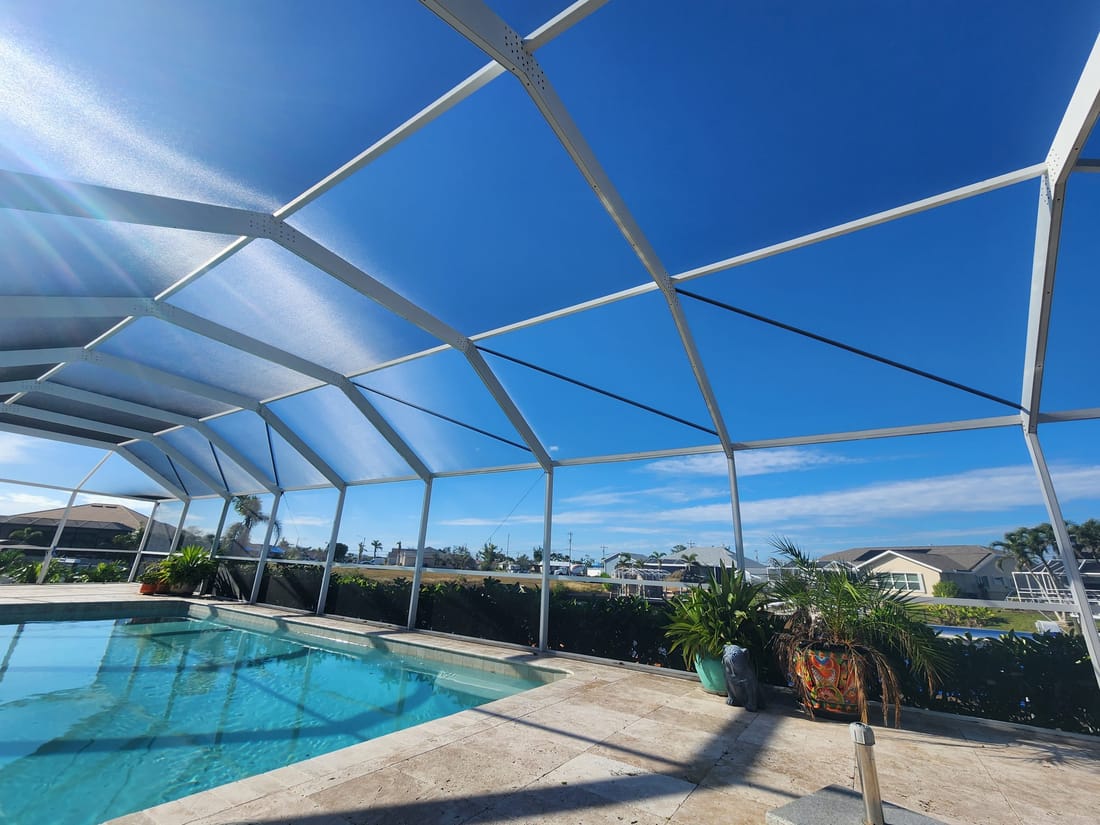
Pool cage rescreening for Miami homes that actually holds up
In Miami, pool cages see more abuse than almost anywhere in the country. Sun, salt air, hurricane-force winds, and year-round use all wear on your screens. When panels start to sag, tear, or pull out of the frame, a professional pool cage rescreen is usually smarter than patching a panel at a time.
Miami Screening focuses on full and partial pool cage rescreening across Miami and nearby coastal neighborhoods, where most enclosures are aluminum-framed with 18 to 25 year old structures. Instead of treating your cage like a generic patio screen, we look at your specific enclosure height, roof style (mansard, dome, or gable), and how close you are to the bay or ocean. Those details control what screen fabric, spline, and fasteners we recommend so you do not end up redoing the work in a few years.
If you are not sure whether you need a complete rescreen or just targeted replacement, we start by walking the entire enclosure, checking every wall and roof panel, corners, doors, and attachment points to the house. We flag rusted hardware, pulled screws at the gutter line, and any frame movement. You see what actually needs attention before you commit to anything.
How the pool cage rescreen process works from first visit to cleanup
When you call Miami Screening for a pool cage rescreen, the first visit is about access and conditions. We confirm ladder and lift access, measure panel sizes, check the condition of the aluminum members, and look for previous repairs. Two seemingly identical cages in Kendall and Palmetto Bay can require different methods if one has settling cracks at the slab or older oxidized framing.
Once materials are chosen and scheduled, we start by protecting your pool and deck. We typically cover the pool surface and any nearby furniture, grills, and outdoor kitchens to keep debris out of filters and off finishes. Then we remove old spline and screen panels, usually starting on the roof so loose mesh does not fall onto new wall panels.
For roof sections, our crews work from interior platforms, exterior ladders, or a small lift where needed, always staying off the actual aluminum screen bars to avoid bending them. Each panel is cut slightly oversize, rolled into the frame channel using the correct spline size, then tensioned section by section so there is no drumming or sagging once the sun hits the fabric.
Doors and hardware get special attention. We pull door screens, square the frame if it has sagged, replace worn hinges or latches if needed, add new bug sweeps at the bottom, then rescreen the door panel. At the end, we trim excess screen, clean up all old mesh and spline, and do a walkthrough with you so you can check every repaired area before we leave.
Screen material options that actually match Miami’s climate
Not all screen fabric handles Miami sun, salt, and insects the same way. Miami Screening carries several mesh options, and we explain the tradeoffs so you are not paying for something you do not need.
Standard 18/14 fiberglass is the most common and budget friendly option for pool cage rescreens. It keeps out mosquitoes and most debris, and is appropriate for inland neighborhoods that are not exposed to constant salt spray. If you are in Coral Gables, Doral, or interior parts of Kendall, this is usually enough if you are willing to rescreen again in 8 to 10 years.
For coastal or bayfront homes, or anyone tired of frequent rescreens, we often recommend a heavier 20/20 or polyester screen. These tighter weaves do a better job against no-see-ums and hold tension longer in high-wind areas. Polyester screen costs more up front but often outlasts standard fiberglass by several years in Miami conditions.
We also install pet resistant screen where dogs or cats scratch at the lower panels, and we can combine materials in one cage. For example, pet screen on the bottom 2 or 3 feet and standard or tighter mesh above. During the estimate we can show you actual samples in the sunlight at your home so you see the visibility and shading differences instead of guessing from a catalog picture.
What affects the cost of a pool cage rescreen in Miami
Homeowners often ask for a price per square foot, but pool cage rescreen costs in Miami depend on several specific factors. Miami Screening prices each job based on actual measurements and conditions rather than guessing from a phone call.
Key cost drivers include cage size and height, number of roof panels, and how many doors or specialty sections you have. A modest 1-story enclosure over a standard rectangle pool is simpler and less expensive than a two-story cage attached to a waterfront home with multiple roof transitions and awkward access.
Access matters. If your enclosure backs up tight to a canal, seawall, or neighboring property, we may need additional equipment or labor to safely reach the outside roof sections. Older structures with oxidized aluminum can take longer, since channels can be tight or brittle and require more careful spline removal.
Material choice also affects cost. Upgrading from basic fiberglass to no-see-um or polyester screen increases material cost, but sometimes lowers your long-term cost if it extends the life of the rescreen by several years. We spell out these differences on the written estimate so you can compare real numbers, not just marketing terms.
We are clear about what is included: removal and disposal of old screen, new spline on all replaced panels, basic frame cleaning where we work, and minor adjustment of doors. Any structural repairs, new fasteners at the house attachment, or gutter work are listed as separate line items so there are no surprises on the final invoice.
Common pool cage problems we find and how we handle them
In Miami, we see several recurring pool cage issues during rescreen projects, especially on homes built in the 1990s and early 2000s. Catching and dealing with these during a rescreen can prevent bigger problems later.
Pulled or rusted fasteners where the cage connects to the home or slab are common. While rescreening, we look closely at those anchor points. In many cases we can replace corroded screws with stainless or coated fasteners and add new tapcons where the slab allows. If we see structural concerns beyond typical wear, we tell you plainly and recommend a cage contractor or engineer where appropriate instead of ignoring it.
We also find bent or twisted frame members from past storms or people climbing on the cage to clean gutters. Lightly bowed bars can often be trued up during rescreening so the new panels sit tight. Severely damaged members may require replacement, which we discuss before proceeding.
Door issues are another big one. Miami humidity swells thresholds and shifts slabs slightly, which can throw doors out of square. During a pool cage rescreen, we realign door frames where possible, adjust hinges and strikes, and replace worn bug sweeps so that insects and leaves stay out. If a door is too corroded or twisted to fix, we can quote a replacement door unit to be done along with the rescreen.
Finally, we look at gutter lines and where the cage meets your roof. Clogged gutters that spill into the cage can stain new screen quickly. While we are not a gutter company, we will point out these issues so you can correct them before they affect your new screens.
What Miami homeowners should do before and after a rescreen
A smooth pool cage rescreen is easier when the homeowner prepares the area. Before Miami Screening arrives, we ask that you clear movable furniture, planters, toys, and grills away from the cage walls if possible. If there are items too heavy to move, let us know in advance so we can plan extra hands.
Pool equipment should be set to run less during work hours to avoid pulling dust and debris into filters. If you have an automatic cleaner, we often recommend turning it off the day we start until the bulk of debris is removed from the pool surface. We typically skim and vacuum major debris at the end, but your pool service may need a follow-up visit for fine dust.
After the rescreen, avoid hosing or pressure washing the new screens for at least a few days, especially in peak heat, so the material and spline can relax and settle into the frames. Normal rain is fine. If you plan to repaint the cage or pressure clean the frame, it is usually better to do that before a rescreen, and we can coordinate timing so the new mesh is not damaged.
Keeping your rescreened pool cage in good shape is mostly about simple habits. Trim trees and palms so fronds are not rubbing on the roof panels. Ask anyone cleaning your roof or gutters not to lean ladders directly on the screen bars. If you see a small tear or loose spline in the future, call early. Tackling minor issues before storm season usually keeps you from facing widespread damage after a heavy wind event.